Case study · SteadyDrive · Telematics · Mobile app · Landing pages
A better website, a better-fit user: sign-ups up 13% and app retention nearly doubled
Landing page and email design that explains behaviour-based car insurance in seconds.
The problem
What was getting in the way
SteadyDrive helps safe drivers save on car insurance by tracking how they drive. The product needed landing pages that made that simple idea obvious and made signing up and downloading the app feel effortless.
Goal: Reach a 10–12% conversion rate after launch.
The approach
How I tackled it
The design leans on simple messaging, visuals that make the process easy to follow, clear calls to action, and trust signals such as testimonials. I designed the web pages and the emails, and rolled the work out in three phases.
Key decisions
The calls that shaped the result
Phase 1: launch on Instapage
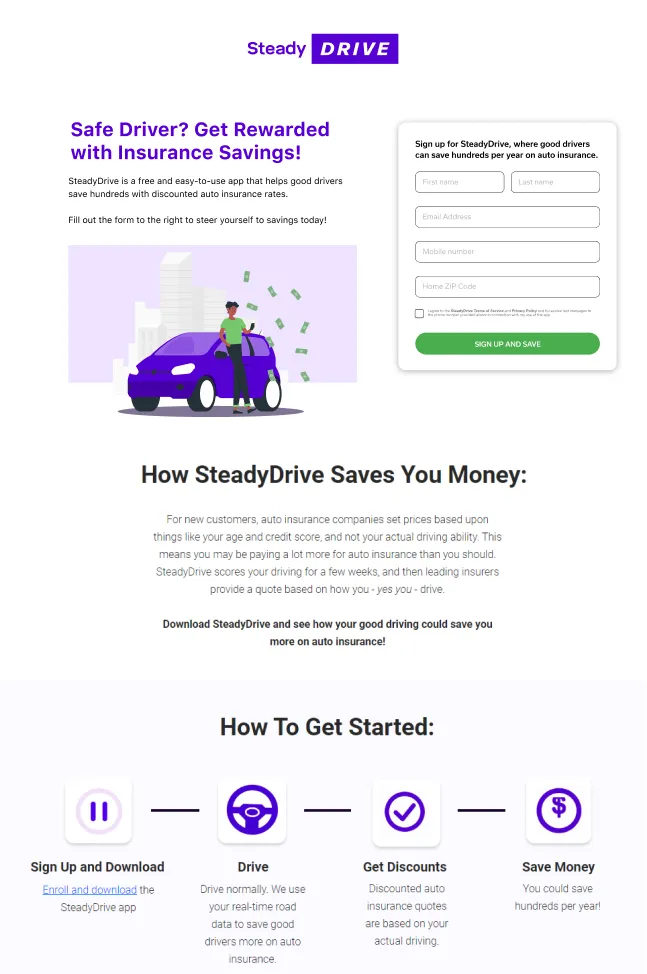
The first version focused on a clear explanation of SteadyDrive and a short sign-up form. Conversion came in at 6–8%, just under the 10–12% target, so the next steps were better paid ads, email campaigns and sharper messaging and creative.
Phase 2: move to Webflow
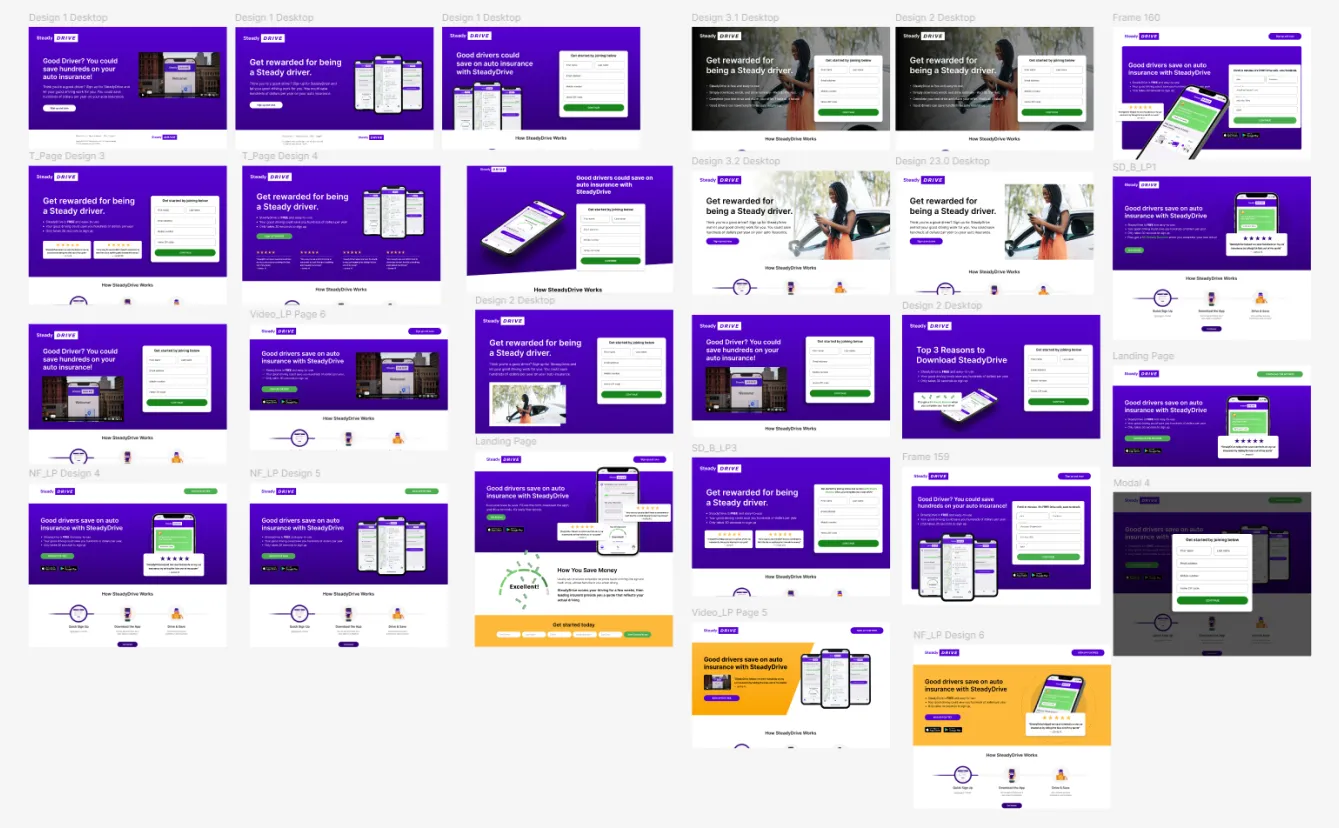
We moved the site to Webflow for design flexibility, speed, a CMS, A/B testing and software integrations. I presented several design options to stakeholders and narrowed to one that put the key information in the hero, simplified sign-up, and used imagery that showed what you get from the app.
Phase 3: keep iterating
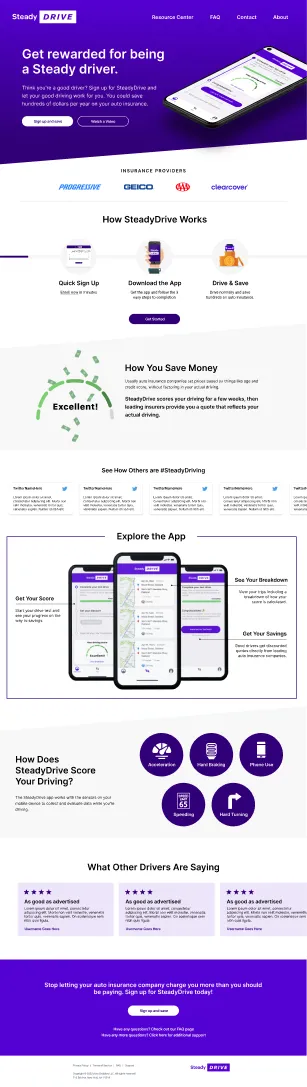
Over six months we refined the best-performing pages. Custom animations that highlighted reviews and in-app features converted noticeably better than the earlier Instapage version.
The work
Selected screens
The result
What changed
Sign-ups increased 13%, and the mobile app's 30-day retention nearly doubled, from 9% to 17%. The likely reason is that the new site did a better job of showing what the app does, so the people who signed up knew what they were getting. Landing page conversion settled at around 11–13%, in the range of the original target.